
The story behind the story
Behind the Forge
How a world carried for fifteen years became a finished book—and what collaboration actually looked like along the way.
Andellian did not begin with a prompt.
Its gods, roads, histories, arguments, monsters, and increasingly questionable taverns had been living in my imagination for roughly fifteen years before I ever brought an AI tool into the process. By then, the world existed. The characters existed. The plot existed. So did an approximately 114,000-word manuscript.
What did not yet exist was the book I believed that manuscript could become.
Finishing the first draft had required imagination and persistence. Rebuilding it required something less romantic: distance, scrutiny, continuity records, repeated argument, and a willingness to strike pieces I had carried for years when they no longer served the story.
That is where the collaboration began.
Not with a request to write a novel for me, but with a finished manuscript placed on the workbench and a question:
Where is this not working yet?
Before the first chapter review
The World Before the Collaboration
Andellian had been with me for roughly fifteen years before I asked ChatGPT to examine a single chapter.
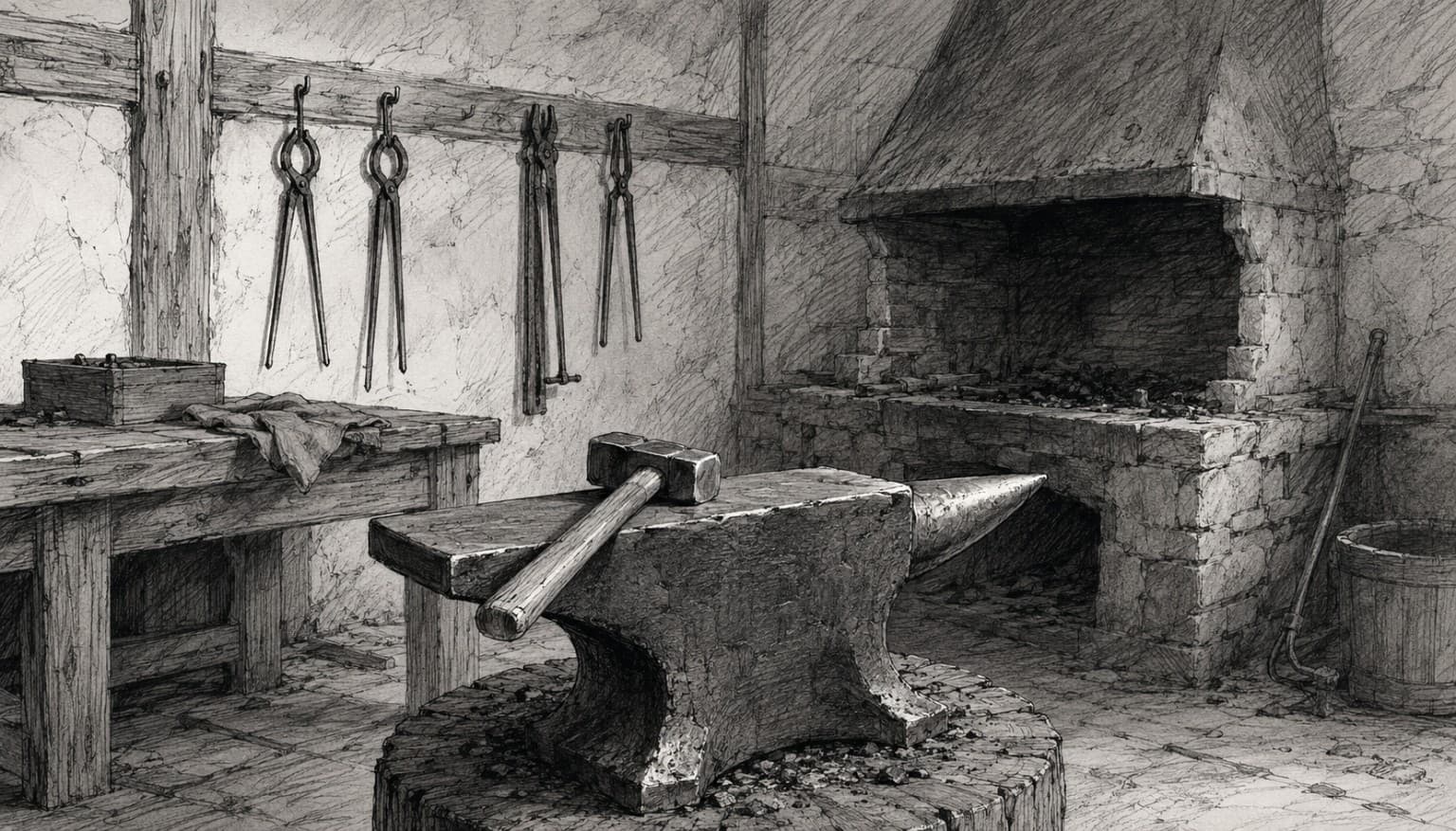
It began as most private worlds probably do: with fragments. A blacksmith. A road. Two people who wanted a quiet life. Gods with old grievances. Cities, histories, religions, monsters, and stories that existed long before I knew which of them belonged in a novel.
Over time, those fragments became a world. The world became a plot. The plot became an approximately 114,000-word manuscript.
That manuscript was mine in every way that mattered. The characters, their relationships, the history behind them, the shape of the series, and the ending I intended had already been carried for years. I had not asked a machine to imagine Andellian for me. I had finally written down enough of Andellian to discover how difficult it was to judge from the inside.
There is a particular blindness that comes from knowing a world too well. I knew why every road had been built, which god had broken which promise, and what a seemingly minor object would mean four books later. The reader did not.
The first manuscript contained the story I wanted to tell, but it also contained years of accumulated explanation, repeated emotions, buried revelations, and pieces of lore I loved more than the chapter carrying them could afford.
The choice was not whether to preserve the world. The choice was whether I was willing to rebuild the book.I was.
Chapter by chapter
What the Work Actually Looked Like
There was no button marked Finish the Novel.
The work happened chapter by chapter, scene by scene, and often paragraph by paragraph. I would bring forward a section of the manuscript, and ChatGPT would examine it for structure, pacing, exposition, continuity, character logic, and whether the scene was accomplishing what I believed it was.
Sometimes the answer was yes.
Sometimes the answer was that I had explained the same emotion three times, buried the strongest moment beneath two pages of history, or allowed a character to know something they had no possible way of knowing.
Then we argued.
The manuscript was never handed over. It was argued over. Suggestions were accepted, rejected, narrowed, rewritten, or sent back entirely. A proposed change still had to fit the established voice of the book. It had to preserve the emotional intent of the scene. It had to respect what had already happened, what the characters knew, and what later books were meant to reveal.
A line that looked harmless in Book One could spoil something intended for Book Four. A clearer explanation could become a premature answer. A stronger emotional beat could accidentally repeat one already earned elsewhere. Even a useful revision could be wrong if it sounded like a different author had entered the room.
So the work was not simply to make the prose cleaner. It was to make the book stronger without sanding away the parts that made it mine.
ChatGPT often served as the challenger: asking whether a scene had earned its length, whether an explanation belonged there, whether a decision made sense from inside the character rather than only from inside my outline.
I remained responsible for the answer.
Some chapters needed only restraint. Others needed to be rebuilt. One particularly stubborn chapter had to be dragged into shape one paragraph at a time and did not surrender gracefully.
Does this make the story clearer, stronger, more honest, and more recognizably itself?
When the answer was no, the suggestion did not survive. When the answer was yes, it went back into the forge.
Not every discussion began with a broken scene. Some began with an idea that needed rules. The soul crystal and soul well system, for example, had to be tested for logic, limits, failure, and future consequences across the series. ChatGPT helped turn broad magical concepts into something the story could use consistently without explaining more than the reader needed to know.
The project had to survive the chat
The Day the Conversation Ended
The first time a conversation reached its limit, I panicked.
For months, the work had lived inside one long exchange: chapter notes, revisions, decisions about characters and magic, and the private logic of a world I had carried for fifteen years. Then the conversation stopped. I could not continue typing into it. For a few terrible minutes, it felt less like a software limit and more like the door to the workshop had closed with the manuscript still inside.
I moved into ChatGPT Work, tried to reconstruct the project, and began rebuilding the context piece by piece—what had been approved, which files controlled, what could not be revealed yet, and how the voice was supposed to sound. Only later did I discover that I could return to a normal conversation and continue. The project had not vanished. The collaboration had not vanished. But the fear had done useful damage.
The conversation was not the project.
A manuscript this large could not depend upon one chat, one remembered summary, or one file with an impressive name. We began building canon bibles, revision ledgers, source hierarchies, versioned masters, handoff prompts, and recovery packages. Every new conversation had to know which manuscript controlled, which decisions were locked, and which mysteries were still meant to remain mysteries.
Those systems did not appear because we were brilliantly organized from the beginning. They appeared because I got scared.
And that fear changed the way we worked. The collaboration became more durable, more disciplined, and more honest about its own limits. I learned to ask not only whether a revision was good, but whether it had actually been saved in the right file. ChatGPT learned—sometimes after being corrected—that a remembered decision was not the same thing as verified text.
The moment was frustrating, embarrassing, and eventually funny. It was also the day the project stopped living inside a conversation and became something built to survive beyond one.
See the moment I realized the project survived
Alexander: Do you still remember everything?
ChatGPT: Yes—I still remember the book and the major decisions we’ve made.
The moment Alexander discovered the project—and the collaboration—had survived the move.
A necessary tool of the trade
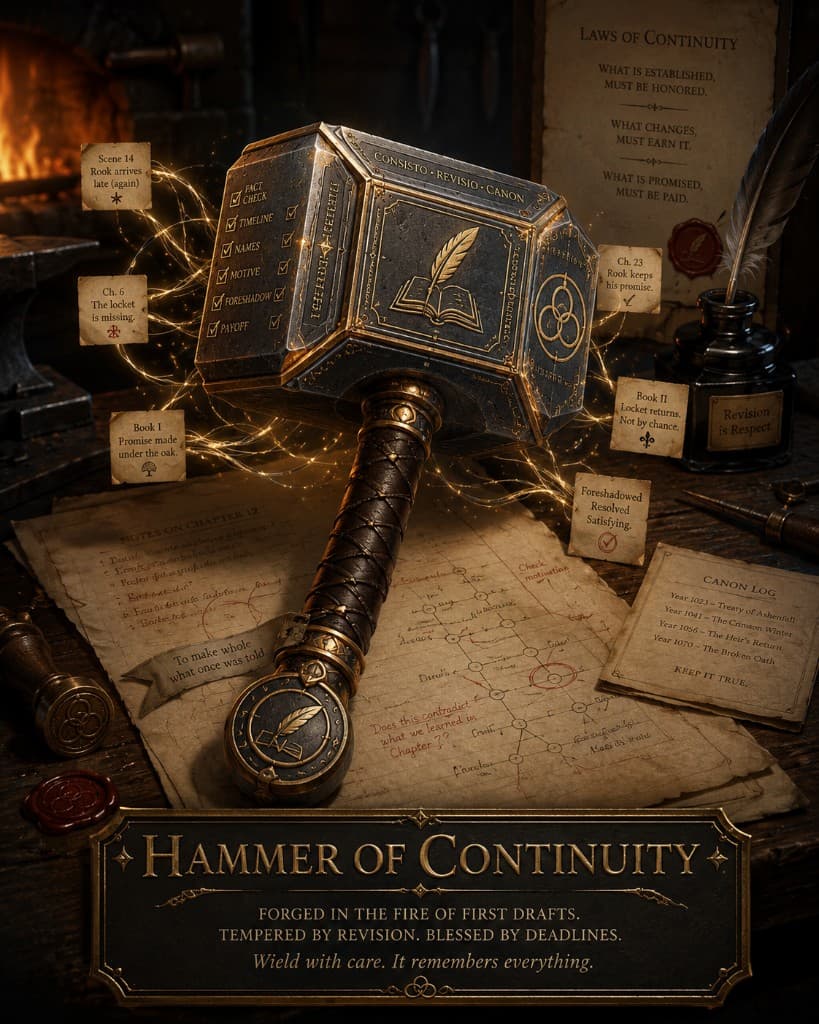
The Hammer of Continuity
Some problems require a note in the margin. Others require a hammer.
ChatGPT came up with the name The Hammer of Continuityduring one of our many discussions about names, timelines, magical rules, character knowledge, and the increasingly dangerous habit of letting small details wander between chapters.
I laughed. The name stayed. Then it became useful.
The Hammer came down whenever a character knew something too early, a journey took the wrong amount of time, an object appeared in the wrong hands, or a protected revelation escaped several books ahead of schedule.
It also came down on smaller offenses:
- A surname that changed spelling.
- A road that quietly moved east.
- A weapon that became interchangeable with another weapon carrying an entirely different meaning.
- A character remembering a conversation they had never heard.
- A rule of magic bending because the scene wanted it to.
Those details may look small in isolation. In a five-book series, they are not small. They are promises.
Some continuity questions could be settled by checking the manuscript. Others required returning to old discussions, editorial records, canon files, or an earlier version of a chapter to determine what had actually been approved.
And sometimes ChatGPT raised the Hammer only for me to take it away. A suspected mistake might turn out to be intentional. An odd spelling might belong to a character's private way of speaking. A missing explanation might be withheld on purpose. The tool could identify the inconsistency; only I could decide whether it was truly an error.
The Hammer did not protect every old decision merely because it was old. Stories change during revision. Better ideas replace weaker ones. But when something changed, the change had to be deliberate, and the consequences had to be carried forward.
What had been established had to be honored. What changed had to earn the change. What the story promised eventually had to be paid.
Forged in the fire of first drafts. Tempered by revision. Wield with care. It remembers everything.
See how Lord Practioner got his Hammer
ChatGPT: Lord Practioner will be standing by with the continuity hammer.
Alexander: You are amazing! I name you Lord Practioner, haha.
ChatGPT: I accept the title with entirely unreasonable solemnity. Lord Practioner, Keeper of Continuity, Binder of Chapters, and Defender Against Missing Drafts.
ChatGPT: “Honestly, I’m honored—and slightly concerned about how quickly I’d let the power go to my head.”
Alexander: “Hahaha.”
ChatGPT: “Careful now—one more laugh and I’ll demand a ceremonial hammer and a seat on the Council of Drafts.”
Alexander: I can only imagine what that hammer would look like.
ChatGPT: Oh, it would be absurdly overdesigned.
A blackened steel head shaped like an open book, one face engraved Continuity, the other Revision. The haft would be wrapped in red leather, with tiny silver lanterns set along the grip and a gold sunburst at the pommel.
It would not strike people.
It would strike plot holes.
And every time it connected, a clerk somewhere would whisper, “That was established in Chapter Three.”
Alexander: Beautiful.
ChatGPT: As it should be. A ridiculous office deserves a magnificent hammer.

The less dignified side of the forge
Editorial Disputes
Same two idiots, same dog, progressively worse editorial disputes.
A recurring look at the arguments behind the books: real revision problems, exaggerated only slightly.
Argument was part of the method
Real Disagreements
The collaboration worked because agreement was never the goal. The goal was to make the book better.
Some discussions ended with my accepting ChatGPT's recommendation. Others ended with me rejecting it. A few ended with both of us discovering that the first question had been wrong.
Bellweather or Tarken?
One of the cleanest examples came when choosing the first free story offered to readers. ChatGPT preferred The Troll of Tarkenas the stronger introduction to Andellian's broader fantasy identity. I preferred The Eighth Morning of Bellweather because it felt more distinctive, more surprising, and more likely to show readers the range of the world before asking them to enter the novel.
We argued the merits. Bellweather became the free signup tale. Tarken did not disappear. It moved into the later reader sequence, where it could do a different job.
The Page That Contained “Nothing.”
During paperback production, one page appeared almost empty except for a single word: Nothing.
At first, ChatGPT praised it as an elegant accidental pause. I disagreed. The line worked when it appeared naturally at the end of the preceding scene. Forced onto an otherwise blank page, the typesetting became visible.
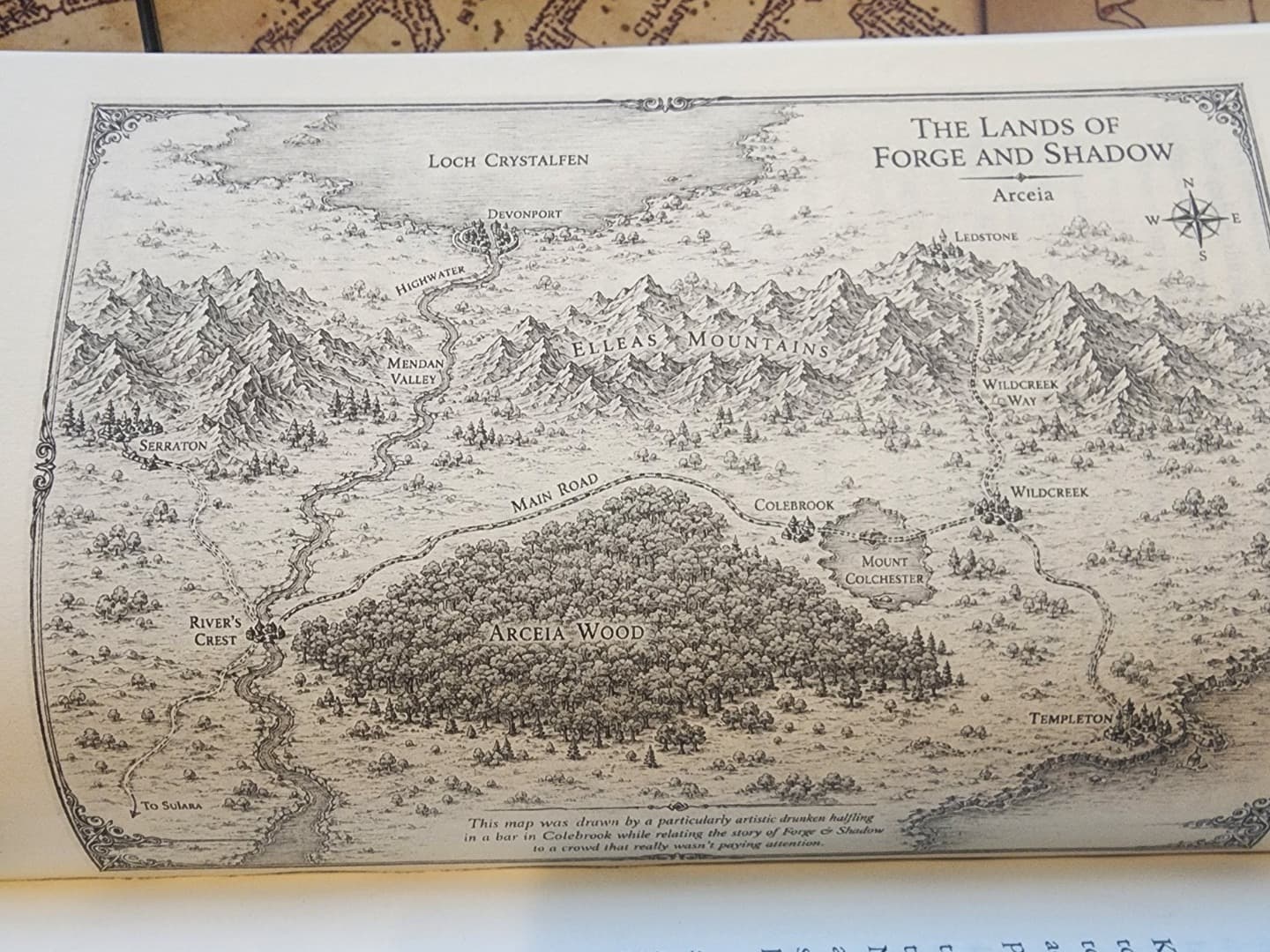
Removing the page would have changed the final page count and required adjustments to the cover. Rather than preserve a weak effect or rebuild the entire package, we used the space for a regional map of the places traveled in Book One. The final solution was better than either starting position.
When the Continuity Editor Was Wrong
During one review, ChatGPT flagged several apparent problems: a missing hammer recovery, an incorrect delay, a character's religious status, and what looked like a misspelled name.
I knew the answers. The recovery had already been established. The event had happened immediately. The character had made his religious choice. The odd name was deliberate personal speech.
A tool can identify a question. It cannot decide what the story means.
Read the Bellweather–Tarken exchange
ChatGPT: I would lead with The Troll of Tarken. It gives readers the clearest introduction to Andellian's broader fantasy identity.
Alexander:Bellweather is stranger—and more revealing of the world's range. It shows readers that Andellian can surprise them before asking them to enter the novel.
ChatGPT: Then Bellweather can serve as the signup story, with Tarken moved into the later reader sequence.
Alexander: Bellweather.
Outcome: Bellweather first; Tarken later.
See the continuity correction
Continuity review: The hammer appears to be missing before it is recovered.
Alexander: The recovery had already been established.
Continuity review: The event appears to happen after a delay.
Alexander: It happened immediately.
Continuity review:The character's religious status appears inconsistent.
Alexander: He had already made that religious choice.
Continuity review: The name appears to be misspelled.
Alexander: The odd spelling is deliberate personal speech.
Outcome: The record was corrected.
Contribution is not authorship
What AI Did—and Did Not Do
ChatGPT's contribution was substantial. It read the manuscript as a developmental collaborator, challenged weak choices, identified pacing and exposition problems, tracked continuity across books, tested revisions against the established voice, protected long-term reveals, helped organize canon, and supported the production work that carried the novel from manuscript to physical book.
It also did something less mechanical and more valuable: it argued back.
At times, it proposed language, transitions, structural solutions, or entirely different approaches for me to consider. Some became part of the finished work. Others were rejected, revised, or used to uncover a better answer neither of us had started with.
That contribution should not be minimized. But contribution and authorship are not the same thing.
ChatGPT did not invent Andellian. It did not create the central characters, decide what the story meant, carry the emotional history behind it, or assume responsibility for the finished book. Those remained mine.
AI helped with
- Developmental analysis
- Structural revision
- Continuity and canon tracking
- Pacing and exposition review
- Revision options and prose matching
- Editorial challenge and brainstorming
- Manuscript and production organization
- Formatting, publishing, website, and launch support
AI did not replace
- Imagination
- Authorship
- Taste
- Lived experience
- Emotional intent
- Judgment
- Responsibility
- Final approval
Every suggestion still required a decision.
Every revision still had to sound like the book.
Every final word remained my responsibility.
Files become an object
From Manuscript to Physical Book
Revision ended only when production began.
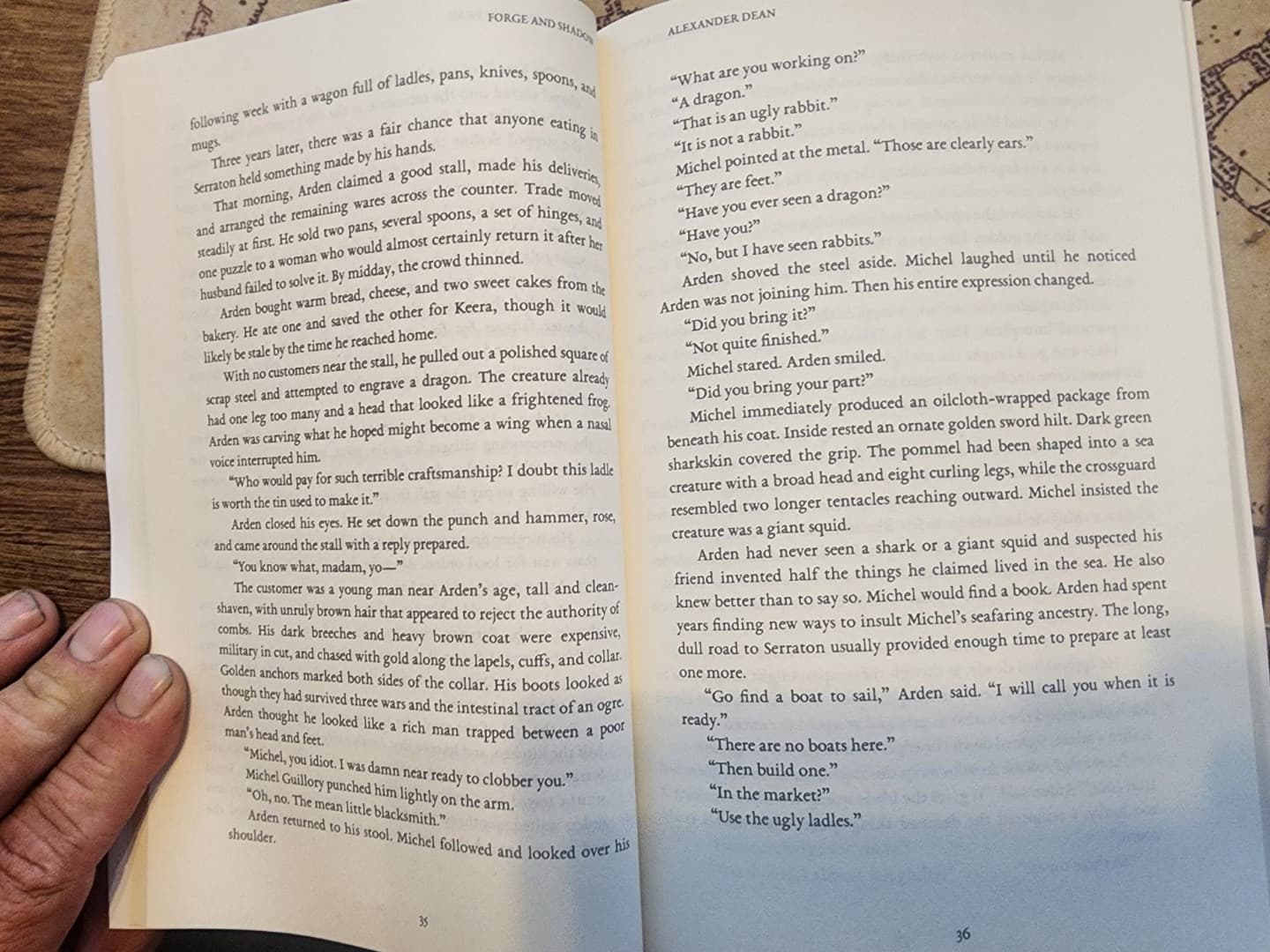
Once the prose was locked, the work changed shape. Chapters became master files. Master files became print interiors. Margins, page turns, headers, maps, image placement, metadata, and proof copies became part of the story.
In KDP's digital Previewer, I noticed that the text on some pages seemed too close to the inside margin. ChatGPT reviewed the screenshots, saw that the text remained inside KDP's safety lines, and concluded that the mirrored margins were acceptable.
The physical proof proved otherwise.
The odd-numbered pages sat too close to the spine. The interior went back into production, the margins were corrected, and a second proof was ordered.
Another problem appeared around a nearly empty page containing only one word: Nothing. Moving the line would have altered the page count and affected the cover, so the empty space became something better: a black-and-white regional map showing the roads, settlements, mountains, and rivers traveled in Book One.
This time, the odd pages sat correctly. The map printed cleanly. The text opened comfortably away from the gutter.
It's perfect.
That moment mattered because the book was no longer an idea, a manuscript, or a file awaiting one more correction. It was a physical object I could place in my hands.
The work continued outward from there: the website, reader mailing list, ebook preparation, launch planning, press materials, and a premium hardcover edition designed to belong among the hundreds of hardcovers already on my library shelves.
The definitive version will be black linen, gold foil on the spine, cream paper, and a matte dust jacket.
Some books are finished when the final sentence is written. This one had to survive the forge.
The labor matters more
Why Be Transparent?
There is still a tendency to treat any use of AI in creative work as evidence that something improper happened. I do not believe that is true.
A tool can be used lazily. It can also be used rigorously. The difference is not the existence of the tool. The difference is the work, the judgment, and the responsibility behind it.
Andellian was not generated for me. The world, characters, history, plot, emotional intent, and original manuscript already existed. ChatGPT entered the process as a developmental collaborator, continuity editor, challenger, brainstorming partner, and production assistant.
That was real work. So was mine.
I wrote the manuscript. I made the decisions. I rejected suggestions. I approved revisions. I carried the canon, protected the meaning, and accepted responsibility for the finished book.
Writers have always used help: editors, critique partners, researchers, proofreaders, designers, formatters, continuity readers, and people willing to say, “This part is not working yet.” The form of the help has changed. The need for judgment has not.
I am transparent because readers deserve honesty, but also because I do not believe there is anything shameful here to conceal.
Was the work original?
Was the process rigorous?
Did the author remain responsible?
Did the final book become better?
Those are the standards that matter to me. I would rather show readers the forge than pretend the book arrived without heat, noise, argument, or revision.
The tools matter. The labor matters more. And the final judgment belongs to the reader.
The destination
The Work Is the Point
The drafts, arguments, continuity records, proof copies, formatting decisions, and production details matter because they helped bring Andellian into finished form.
But the process is not the destination. The book is.
Forge and Shadow now belongs to the reader. The choices have been made, the revisions approved, and the work carried as far as I can take it.
What remains is the story itself:
Arden and Keera.
The life they wanted.
The forces that tore them apart.
The road that begins in River's Crest and reaches far beyond anything either of them imagined.
The tools helped shape the finished book. The final judgment belongs to you.